Shortlist
Browse providers

Montessori, Waldorf, Reggio, Play-Based: What's the Difference?

Every childcare tour starts with the same pitch: "we follow the child." But what that actually means varies dramatically between philosophies. Here's what each approach looks like in practice, what the research says, and how to tell if a program is doing it well — with real programs from Seattle, Chicago, Denver, Kansas City, Charlotte, and the Eastside.

Side-by-Side Comparison

Scroll horizontally on mobile to see all four columns.

Montessori Waldorf Reggio Emilia Play-Based
Founded Maria Montessori, Rome, 1907 Rudolf Steiner, Stuttgart, 1919 Loris Malaguzzi, Italy, 1945 No single founder — rooted in developmental research (Piaget, Vygotsky)
Core belief Children teach themselves when given the right environment and materials Childhood has its own rhythm — protect imagination before introducing academics Children have "a hundred languages" of expression — the environment is the third teacher Play is the primary vehicle for cognitive, social, and emotional development
Teacher's role Guide/observer. Presents materials, then steps back Storyteller/artist. Sets the rhythm, models reverence for learning Co-researcher. Documents, questions, and extends children's thinking Facilitator. Sets up provocations, joins play when it deepens learning
Child's role Chooses own work from available materials during long uninterrupted blocks Follows the class rhythm — circle time, handwork, outdoor play, story Initiates projects based on interests; works collaboratively Leads their own play; structured and free play alternate
Classroom look Ordered, calm. Low shelves with specific materials. Mixed-age groups. Warm, home-like. Natural materials, watercolors, silks, wool. No plastic. Light-filled, open. Documentation panels on walls. Atelier (art studio). Activity stations. Blocks, dramatic play, sand/water, art. Varies widely.
Screen policy Rarely used. Not part of the method. Explicitly screen-free. No screens ever. Rarely used. Focus on hands-on materials. Varies. Progressive programs avoid screens; some use them in transitions.
Academic readiness Early and concrete. Children often read and do math operations by age 5. Delayed. No formal literacy/math before age 7. Emphasis on readiness, not drilling. Emergent. Academic skills develop through projects, not worksheets. Embedded in play. Counting during block-building, letters through storytelling.
Best for Self-directed kids who thrive with structure and choice Imaginative kids who need rhythm, nature, and time to develop Curious, collaborative kids in families who want to be deeply involved Most children — the most flexible and widely adapted approach

Montessori

Founded by Dr. Maria Montessori · Rome, 1907

What It Actually Looks Like

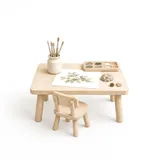
Walk into a Montessori classroom and you'll see children working independently or in small groups, each with a specific material: pouring water between pitchers, tracing sandpaper letters, building the pink tower. The room is quiet but busy. Nobody is sitting in a circle being told what to do next.

The core structure is the "work cycle" — a 2.5-to-3-hour uninterrupted block where children choose their own activities from materials the teacher has presented to them individually. Mixed-age groupings (typically 3-6 year-olds together) mean older children mentor younger ones.

AMI vs. AMS — This Matters

Not all Montessori is equal. The name isn't trademarked, so anyone can call their program "Montessori."

  • AMI (Association Montessori Internationale) — the gold standard. Founded by Maria Montessori herself. Rigorous teacher training, strict adherence to methodology. If a school is AMI-accredited, the pedagogy is authentic.
  • AMS (American Montessori Society) — slightly more flexible. Still requires substantial teacher training and classroom standards, but allows more adaptation.
  • "Montessori-inspired" — means nothing specific. The school may use some materials or language but has no accreditation or accountability to the method.

What the Research Says

A 2017 meta-analysis in the Journal of Montessori Research found that children in high-fidelity Montessori programs (AMI-accredited) showed advantages in reading, math, and executive function compared to conventional programs. The key phrase is "high fidelity" — programs that loosely adopt Montessori materials without the full methodology don't show the same results.
Browse Montessori programs in our database

Waldorf

Founded by Rudolf Steiner · Stuttgart, 1919

What It Actually Looks Like

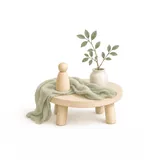
A Waldorf classroom feels like a well-loved living room. Wooden toys, beeswax crayons, silk play cloths, a nature table that changes with the seasons. The day follows a predictable rhythm: free play, circle time (singing, movement, verse), handwork (knitting, woodworking), outdoor play in any weather, and storytelling — always storytelling.

Teachers stay with the same class for multiple years, building deep relationships. There are no worksheets, no letter-of-the-week, no reading instruction before age 7. The philosophy holds that children need to develop their imagination and physical body before abstract academics. Screens are not just discouraged — they are explicitly prohibited.

The Controversy

Waldorf's delayed-academics approach makes some parents anxious. If the kindergarten down the street is teaching reading at 5, is your child falling behind at 6? Research suggests no. A 2015 Stanford study found that delayed formal instruction correlated with better reading comprehension by age 11 — but the study has limitations and the Waldorf community sometimes overstates it. The honest answer: most Waldorf kids catch up quickly in 1st-2nd grade, and some thrive specifically because they weren't pushed early. A few would have benefited from earlier exposure.

How to Tell If It's Real Waldorf

Look for affiliation with AWSNA (Association of Waldorf Schools of North America) or WECAN (Waldorf Early Childhood Association of North America). Ask about teacher training — authentic Waldorf teachers complete a multi-year training program beyond their standard teaching credential.

Browse Waldorf programs in our database

Reggio Emilia

Developed by Loris Malaguzzi · Reggio Emilia, Italy, 1945

What It Actually Looks Like

Reggio classrooms are designed to be beautiful. Light, mirrors, natural materials, and open-ended art supplies are everywhere. The walls are covered with "documentation panels" — photographs, transcriptions of children's conversations, and displayed project work that make learning visible.

There is no fixed curriculum. Instead, teachers observe what children are interested in, then design projects ("progettazione") that extend those interests into deeper investigation. A child's fascination with puddles might become a weeks-long project involving measurement, drawing, weather observation, and collaborative mural-making.

Most Reggio programs have an "atelier" — a dedicated art studio with a resident atelierista (art specialist) who works alongside classroom teachers. Parent involvement is not optional; it's built into the philosophy.

Why You Can't Be "Reggio-Accredited"

Unlike Montessori and Waldorf, there is no Reggio Emilia accreditation body. The original schools in Italy explicitly refuse to franchise the approach. Any school calling itself "Reggio-inspired" is self-identifying. This means quality varies enormously. The best Reggio programs are genuinely exceptional; the weakest are conventional programs with nicer decorations.

How to Tell If It's Genuine

  • Ask to see documentation panels. If they can't show you children's project work displayed with teacher annotations, they're not really doing Reggio.
  • Ask about the last long-term project. A real Reggio program can describe a multi-week investigation that emerged from children's interests.
  • Look at the space. It should feel intentional, light, and full of natural materials — not cluttered with primary-color plastic.
Browse Reggio programs in our database

Play-Based

No single founder · Rooted in developmental psychology (Piaget, Vygotsky, Erikson)

What It Actually Looks Like

A play-based classroom has stations: block area, dramatic play corner, sand and water table, art easel, book nook, sensory bins. Children rotate between activities based on their interest, with teachers joining in to scaffold learning — asking questions, introducing challenges, narrating what they observe.

The best play-based programs have a clear distinction between "free play" (child-directed, minimal adult intervention) and "structured play" (teacher designs an activity with a learning goal but children lead the exploration). A skilled teacher uses both.

This is the most common approach in co-ops, nonprofits, and programs that don't affiliate with a specific method. It's also the most flexible — and the most variable in quality.

The Quality Spectrum

"Play-based" covers a wide range. At its best, it means intentionally designed environments where children develop problem-solving, social negotiation, executive function, and pre-academic skills through deeply engaging play. At its worst, it's a euphemism for "we don't have a curriculum and the kids just kind of... play."

How to Tell If It's High Quality

  • Ask how teachers plan. Good play-based programs document observations, set learning objectives, and design provocations. If the answer is "we just let them play," that's a red flag.
  • Look for a state quality rating. In Washington, that's Early Achievers (Level 3+ is strong). In Illinois, it's ExceleRate (Gold or above). In Colorado, it's Colorado Shines (Level 3+ is strong).
  • Watch the teachers during free play. Are they on their phones, or are they engaged — down at child level, asking open-ended questions, extending play scenarios?
Browse play-based programs in our database

What to Ask on Your Tour

These questions work regardless of philosophy. They're designed to reveal whether a program is doing what it claims.

Ask Every Program

  1. "How long has the lead teacher been here?" — Staff turnover is the single best proxy for program quality. If the lead teacher has been there 5+ years, something is working. If they started last month, dig deeper.
  2. "Walk me through a typical morning." — You want specifics, not philosophy. What happens between 8:00 and 11:30? If they can't describe it concretely, they may not have a structured routine.
  3. "What's your screen policy?" — The answer tells you a lot about whether the program is intentional about child development or using shortcuts.
  4. "How do you handle a child who is struggling socially?" — Every program will say "we're inclusive." This question reveals whether they have actual strategies or just platitudes.
  5. "Can I see your most recent inspection report?" — In Washington it's DCYF, in Illinois it's DCFS, in Colorado it's CDEC. Any licensed program should show you this without hesitation. If they deflect, that's information.

Ask Montessori Programs

  1. "Are you AMI or AMS accredited?" — If neither, ask what Montessori training the teachers have. The answer determines whether you're getting authentic Montessori.
  2. "How long is your uninterrupted work cycle?" — Should be 2.5-3 hours minimum. If work periods are broken up every 30-45 minutes, the core Montessori benefit (deep concentration) is undermined.

Ask Waldorf Programs

  1. "What Waldorf teacher training do your lead teachers have?" — Look for completion of a recognized Waldorf training program (Antioch, Sunbridge, Rudolf Steiner College).
  2. "How do you support a child who is already reading before age 7?" — A good Waldorf program won't suppress a child's interest — they'll meet the child where they are while maintaining the program's rhythm.

Ask Reggio Programs

  1. "Can you show me documentation of a recent project?" — If they can walk you through a multi-week investigation with children's words, photos, and teacher reflections, they're doing real Reggio.
  2. "How do parents participate in curriculum decisions?" — Parent involvement is foundational to Reggio. If the answer is "we send a monthly newsletter," that's not it.

Ask Play-Based Programs

  1. "How do you plan activities? Is there a written curriculum or framework?" — Good play-based programs have a planning process, even if the curriculum is emergent. "We follow the child" without any documentation is a concern.
  2. "How do you assess kindergarten readiness?" — You want to hear about observation-based assessment, developmental milestones, and specific skills — not "they'll be fine."

Find Your Match

Our database includes providers across all four philosophies in Seattle, Chicago, Denver, Kansas City, Charlotte, and the Eastside — each with inspection records, staff data, pricing, and a full editorial review.

Start browsing →